The Jan Opletal Awards Have Their Winners. This Year, for the First Time, They Were Presented in Three Categories
17. 8. 2026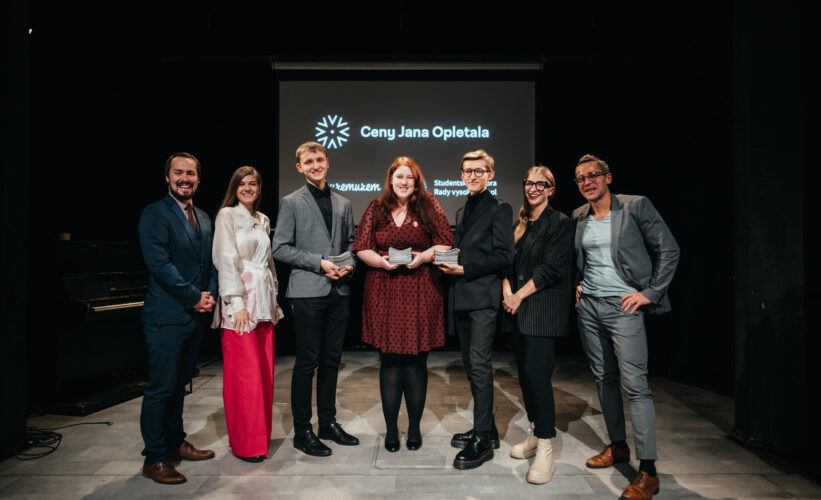
November 11, 2023, Prague
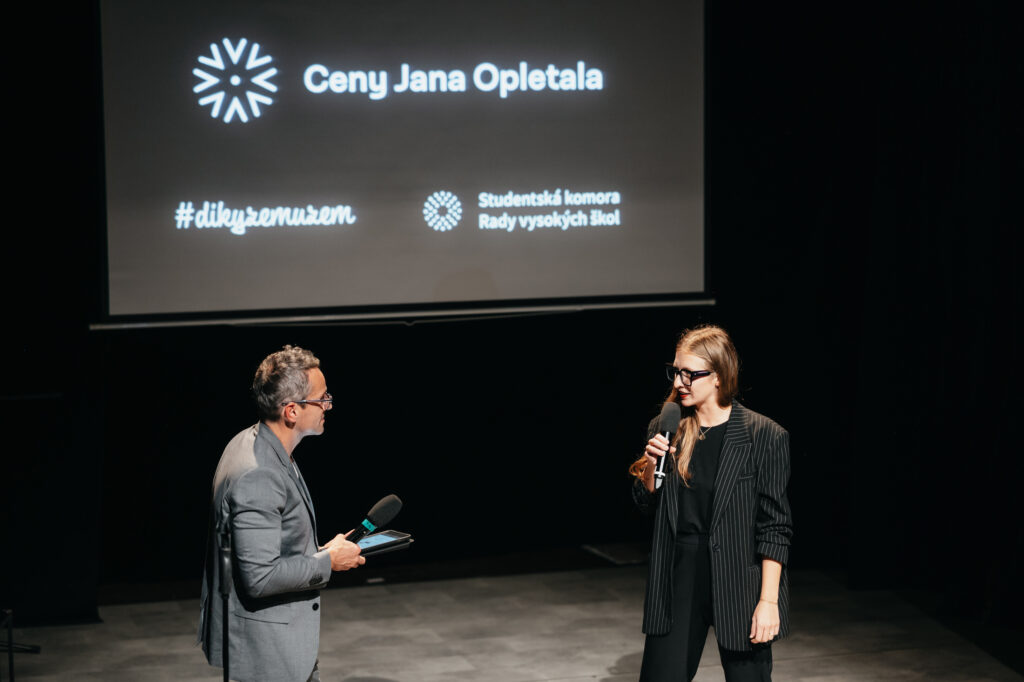
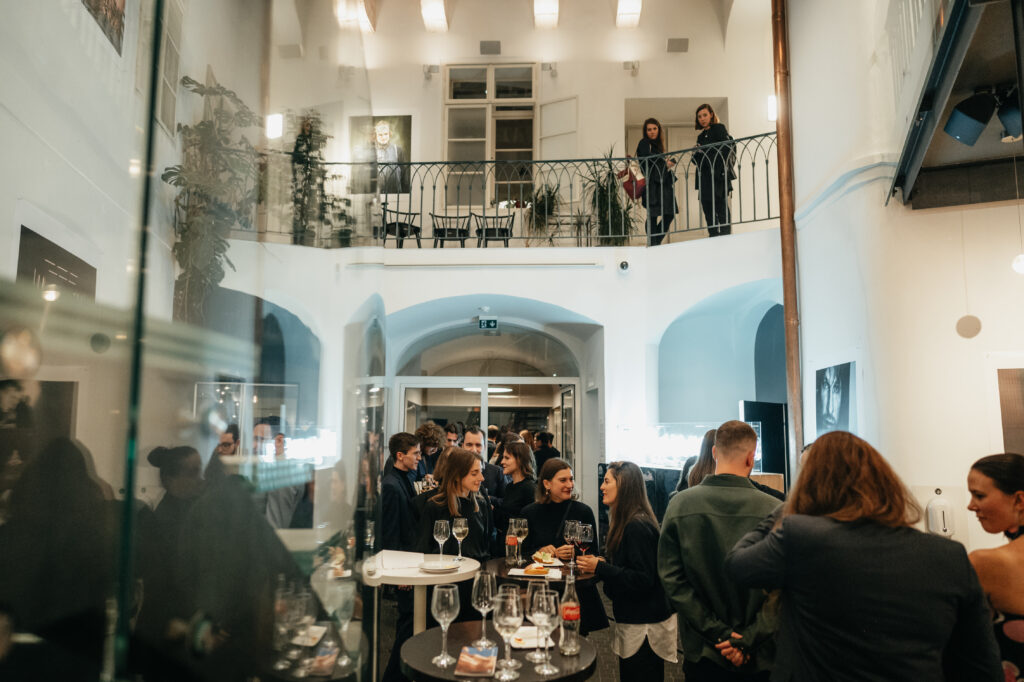
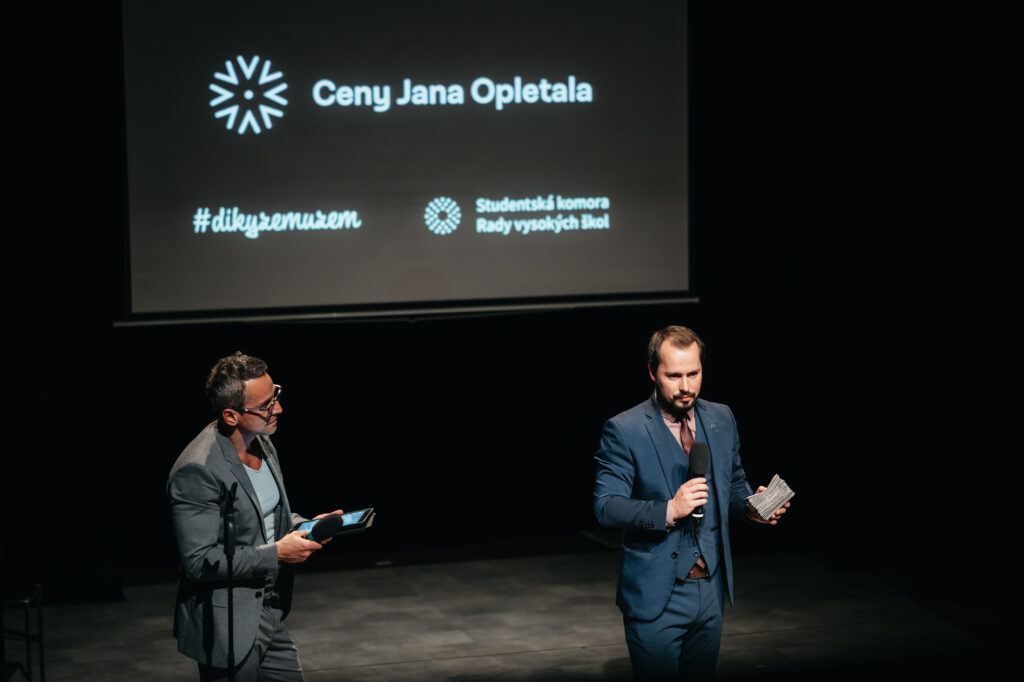
On November 11, we commemorate Jan Opletal, a student who was fatally wounded during an anti-Nazi demonstration in 1939. The commemoration of his memory later sparked the events of November 1989. In his honor, the Jan Opletal Awards were presented for the eleventh time. This is a national student award for active higher education students, and, new as of this year, also for secondary school students and young engaged personalities under 30. The awards are presented by the Student Chamber of the Council of Higher Education Institutions together with the association Díky, že můžem. The award ceremony took place at Divadlo Na zábradlí. A total of 34 individuals were nominated.

During the award ceremony, prizes were presented in three categories. The purpose of the award is to recognize the effort and achievements of active secondary school and higher education students for their activities both at school and beyond. “For the eleventh time, we want to recognize, above all, the defense of academic rights and freedoms, an outstanding contribution to the development of the academic or school environment, and, not least, the fight for equal opportunities and against any form of discrimination,” says Michal Farník, Chair of the Student Chamber of the Council of Higher Education Institutions, describing the main criteria.
This year’s new feature is that, unlike in previous years, one of the awards also goes to a secondary school student. Specifically, it goes to Anežka Tetřevová, a final-year student at Luděk Pik Grammar School in Pilsen. Anežka is in her second year as Chair of the Student Parliament of the Pilsen Region and is intensively committed to mobilizing students, not only in her own region. In 2022, on her initiative, the largest student pre-election presidential debate, “Zavolíme!” (“We’ll Vote!”), was created. She coordinated the project, which succeeded in opening a live, in-class discussion about the presidential election in 145 schools across the Czech Republic, thereby helping to raise awareness among the younger generation about the importance of civic participation.
The laureate in the higher education category was Šárka Faicová, a first-year student of communication studies at the Faculty of Social Sciences of Charles University. Since her secondary school years, she has been involved in the Kudykampus project, where she manages the ambassador community and cooperation with schools and student organizations. She is committed to helping participants, through the programme, figure out which higher education institution to choose. She is also involved in the Safezóna project, focused on mental health. She was an intern at the Institute of Czech Literature of the Czech Academy of Sciences, where she created a corpus of 2,000 Czech female authors and examined various variables that had influenced their lives. She has also volunteered on a number of other projects.
Another new feature of this year was the award in the category of personalities under 30, for socially beneficial activities. This prize went to Tobiáš Frýdl, a production student at FAMU and the son of a pastor of the Czechoslovak Hussite Church. He is behind the project Víra v barvách duhy (Faith in the Colors of the Rainbow). It is his own private initiative, through which he seeks to connect two seemingly incompatible minorities: the LGBT community and Christianity. The project consists of a series of videos, presented in an accessible format, featuring respondents from various churches. Several dozen people took part in the project — pastors, clergy, and experts in fields such as biblical studies or practical theology, many of whom teach at faculties of theology. The project deliberately presents open and accepting currents of opinion. It does not intentionally map conservative positions within the churches, yet it still offers a plurality of views. The videos were only published a few weeks ago, and the committee therefore decided to also recognize this timely contribution to public discourse.
Laureates could be nominated both by students themselves — for example, their peers or close colleagues — and by representatives of individual schools. Many students were nominated by rectors and deans from several Czech universities, academic senators, and others. The winners were selected from among all nominees by a committee that included, alongside representatives of the two organizing bodies, representatives of civil society. These included, for example, influencer Johana Bázlerová and Kryštof Vosátka of the BLÍŽKSOBĚ Foundation. The committee was chaired by Michal Nguyen, who himself received the award in the past for his activities within the academic senate of Palacký University Olomouc..

“It’s wonderful and inspiring to see so many talented young people among the nominees. The Jan Opletal Awards are of invaluable importance in encouraging young people to actively engage with society. Their engagement and their voice have enormous potential to bring about change and to strengthen democratic values. That is exactly what we saw in every one of the nominated individuals. We believe this award will help encourage young people not to be afraid to express their opinions and to actively engage in public life. Only in this way will our democracy flourish — the fresh perspective of young people and innovative approaches are essential to our society, and we should support them on this path,” concludes Bára Stárek, Chair of the association Díky, že můžem.